Rebuilding Smart in Pacific Palisades After Wildfire
Rebuilding a fire-damaged house in Pacific Palisades is about much more than replacing what was lost. It is a chance to build a safer, stronger, and more efficient custom home that fits the way you live now and protects your long-term investment.
A ground-up rebuild invites bigger questions: Are the utilities safe and sized for modern life? Has the soil changed after the fire and cleanup work? What foundation type makes the most sense for your slope, your views, and current codes? When these pieces are planned together, you get a home that feels calm and solid, not patched together.
At Pure Builders, we approach fire rebuilds as full design-build projects, with structure, utilities, and permitting all coordinated from day one. In Pacific Palisades, where hillsides, canyons, and coastal fire zones all meet, that kind of planning matters. In the spring months, starting design and preconstruction now is what sets you up to break ground in the drier season and be further along before the next fire season and winter storms roll in.
In this article, we will walk through three key pillars of early planning for a fire-damaged house rebuild in Pacific Palisades: resetting and upgrading utilities, testing and understanding the soil after a fire, and choosing the right foundation strategy for your lot.
Resetting Utilities After Fire Damage
After a wildfire, utilities are one of the first things that should be reviewed, but they are often the least visible. Lines and pipes may look fine from the street, yet be damaged underground or at the connection points.
A smart rebuild starts with a full look at your existing utility setup:
- Reviewing utility records for gas, water, sewer, and power
- Walking the site to check meters, boxes, cleanouts, and exposed lines
- Confirming which lines were shut off, capped, or replaced after the fire
- Checking easements that might affect where new lines can run
Common post-fire issues include melted plastic service lines, meters that need replacement, damaged sewer laterals, and older electrical panels that are not sized for a new custom home. There is also coordination with agencies like LADWP, SoCalGas, and the city or county to verify safe shutoff and plan for reactivation or new service.
Since many new homes in Pacific Palisades lean into EV charging, solar, batteries, and sometimes all-electric systems, planning for upgraded capacity happens early, not at the end. This can include:
- Larger electrical service and updated panels
- Seismic gas shutoff valves for added safety
- Dedicated water supply where fire sprinklers are required
- Whole-house surge protection for sensitive equipment
Utility planning is also part of fire resilience. Outdoor hose bib locations, backup power options, and irrigation for defensible space all tie into where lines run and how much capacity you need.
To keep the project moving, trenching and permits need to match the rest of the plan. We coordinate trench routes with structural and landscape layouts so you are not cutting through future driveways or weakening a hillside. Lining up utility and right-of-way permits with your building permits helps prevent delays once crews are ready to start work in the dry season.
Post-Fire Soil Testing and Site Forensics
Soil testing after a wildfire is not the same as testing an untouched lot. Heat, ash, debris removal, and heavy machinery can all change what is happening under the surface, especially on Pacific Palisades slopes and canyon edges.
Wildfire and cleanup can affect:
- Soil structure and compaction from equipment
- Drainage paths where topsoil and plants were lost
- Possible contamination from ash, metals, and burned building materials
For a fire-damaged house rebuild in Pacific Palisades, relying on old soil reports or past assumptions is risky. Current geotechnical testing is needed to meet code and to design a foundation that actually fits the new ground conditions.
Geotechnical and civil engineers each play an important role. A geotechnical report looks at bearing capacity, expansive soils, signs of old landslides, and groundwater behavior. Civil engineering then helps shape grading, drainage systems, retaining walls, and any slope stabilization. Those pieces directly influence the size and placement of the new home, garages, and outdoor living areas.
Bringing geotechnical and civil engineers into the process early means their findings guide the architectural design, instead of forcing you to redesign later when a surprise soil condition shows up.
Drainage and erosion planning are just as important as the foundation itself. Post-fire land can be more exposed to erosion and mudflow, even on gentle slopes. A good plan might include:
- Swales to direct surface water away from the home
- French drains and subdrains behind retaining walls and below flat yards
- Permeable hardscape that helps reduce runoff and puddling
This kind of planning supports comfort as much as safety. Drier crawlspaces or lower levels, less cracking in patios and pools, and more stable walkways all come from thoughtful drainage tied into the soil and grading plan.
Foundation Strategies for Hillside and Coastal Rebuilds
When starting a ground-up rebuild, it is tempting to ask if you can just reuse the old foundation. Most of the time, this is not a good idea and often is not allowed after a major fire loss.
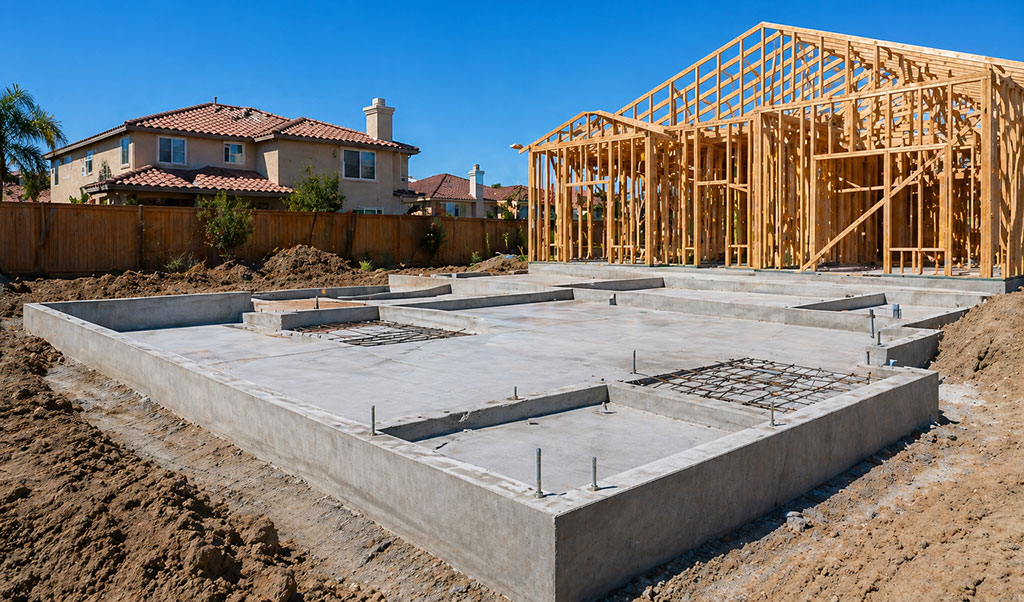
Modern building codes, updated geotechnical results, and current engineering standards usually point toward a new foundation system, even if the old house seemed fine. Any remaining concrete will need to be checked for heat damage, hidden cracking, and rebar corrosion. Older reinforcement often does not match today’s seismic and fire-adjacent expectations.
Pacific Palisades has a mix of flat pads, gentle slopes, and steep hillside lots, so foundation strategies can vary. Typical options include:
- Slab-on-grade for flatter sites with stable soils
- Raised foundations that allow better access and ventilation
- Caissons and grade beams for steeper lots or weaker soils
- Hybrid systems that combine deep supports, decks, and view framing
Coastal conditions, nearby faults, and hillside behavior all matter when deciding if you need deep foundations, tiebacks, or significant retaining walls. Making those calls early lets the architect design with more freedom, such as cantilevered rooms, large decks, and wide window walls that still sit on a solid structural base.
A well-planned foundation does more than hold up walls. It can support safer driveway grades, better turnarounds for emergency vehicles, and clear access routes that fire departments like to see. Pools, rooftop decks, and multi-level terraces also rely on the foundation strategy, so these lifestyle pieces should be part of the structural conversation from the start.
Over time, stronger structure and smart site work can support better insurance outcomes, appraisals, and resale value, especially when compared to a home that was only lightly repaired on an old footprint.
Turning a Fire Loss Into a Future-Ready Custom Home
Choosing a ground-up design approach after a wildfire is a chance to rethink your property in Pacific Palisades from the soil up. Rather than piecemeal repairs, you can align the home with current energy expectations, modern fire resilience, and the way you actually live day to day.
When utilities, soil, and site work, and foundation engineering are all planned together, the result is a home that feels safer, works better, and holds its value over time. A fire-damaged house rebuild in Pacific Palisades becomes less about loss and more about building a future-ready custom home.
At Pure Builders, we guide the process end to end as a local design-build contractor, from early site review and design, through engineering, permitting, and construction. Thoughtful planning in spring puts you in a strong position to move into the dry building season with a clear path forward, and we see this article as one part of a larger series on Pacific Palisades fire-rebuild planning, including upcoming topics like architectural design, wildfire hardening, and outdoor living for new construction homes.
Get Started With Your Project Today
If you are ready to restore your property with a trusted team, Pure Builders is here to guide every step of your fire-damaged house rebuild in Pacific Palisades. We focus on safety, quality craftsmanship, and clear communication so you know exactly what to expect from start to finish. Reach out to us through our contact us page, and we will schedule a time to review your goals and discuss the best path forward. Together, we can turn a fire-damaged structure into a home you are proud of again.